Two Cabinets Can Look Similar but Cost Very Different Amounts
A common question from jewelry brands is surprisingly simple:
Why are two custom jewelry display cases with almost the same appearance quoted at very different prices?
At first glance, the cabinets may appear almost identical. Both may have glass, metal, lighting and a stone or wood finish. Both may be approximately the same size.
But the final quotation can be significantly different.
The reason is that the visible appearance represents only a small part of what goes into a professional jewelry showcase.
The real cost is hidden in the structure, materials, engineering, finishing, hardware, lighting, quality control, packaging and project service behind the surface.
Start With the Glass
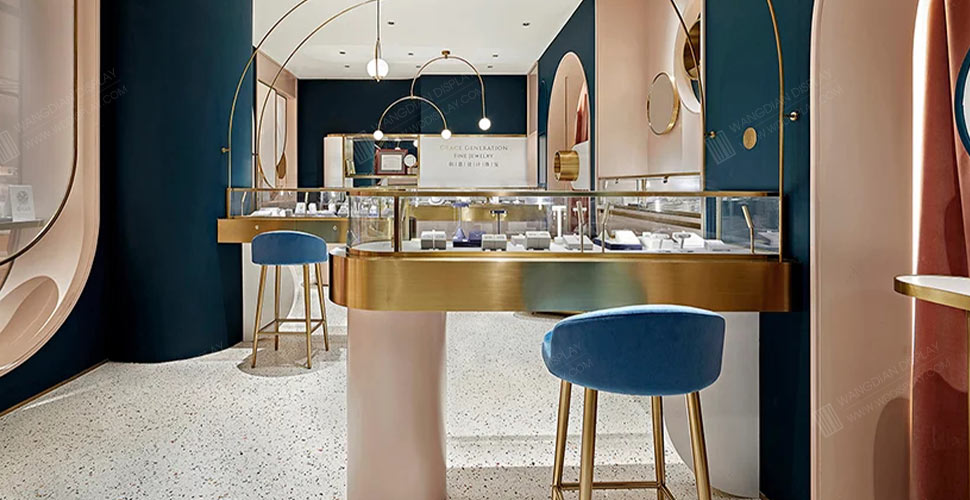
Glass is one of the easiest places to see a difference between specifications. Two pieces of glass can have similar dimensions but very different optical and safety characteristics.
For premium jewelry displays, buyers may consider low-iron glass when visual neutrality and clarity are important. Security requirements may call for laminated or other specialized glazing solutions depending on the project. Anti-reflective treatment can also affect both appearance and cost.
Therefore, comparing prices based only on “glass thickness” can be misleading. The glass specification needs to be understood as a complete package.
Then Look Inside the Cabinet
The external finish is only part of the product. A custom jewelry display cabinet may contain:
· concealed structural frames;
· electrical wiring;
· LED modules;
· drivers and control components;
· adjustable display inserts;
· concealed hinges;
· locking mechanisms;
· ventilation or service access;
· reinforced internal structures.
None of these components may be obvious when looking at the finished cabinet. Yet they influence production time, material consumption, installation complexity and long-term reliability. This is why two cabinets that look similar in photographs can have very different manufacturing costs.
Surface Finishing Is Another Hidden Cost
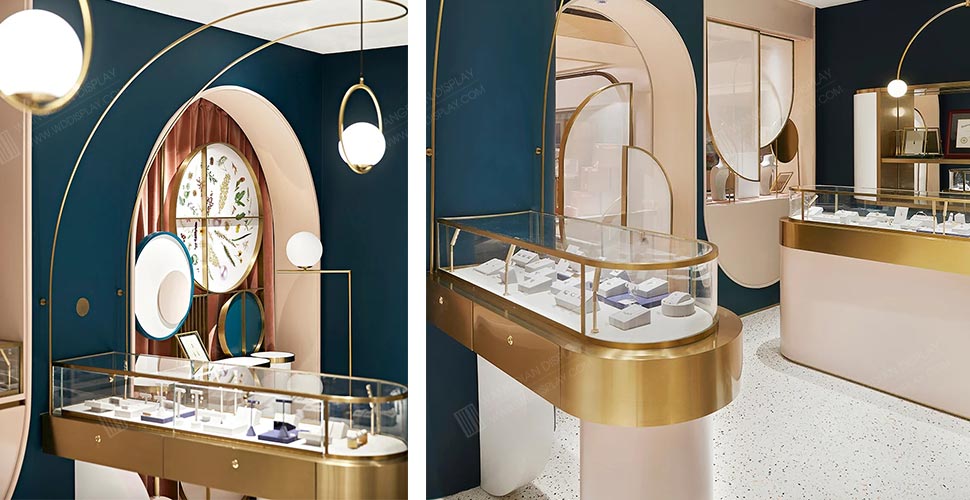
Luxury retail is unforgiving when it comes to surface quality. A standard painted panel and a carefully finished high-end panel may look similar from a distance. Up close, the difference becomes obvious.
Surface preparation, coating systems, polishing, plating, brushing, color matching and repeated inspection all add production time.
The same applies to wood veneer. A simple veneer panel is very different from a carefully selected and matched veneer with controlled grain direction across several connected panels.
For a luxury jewelry brand, these details may be subtle, but they are part of the overall perception of quality.
Customization Has a Price—and Sometimes Saves Money
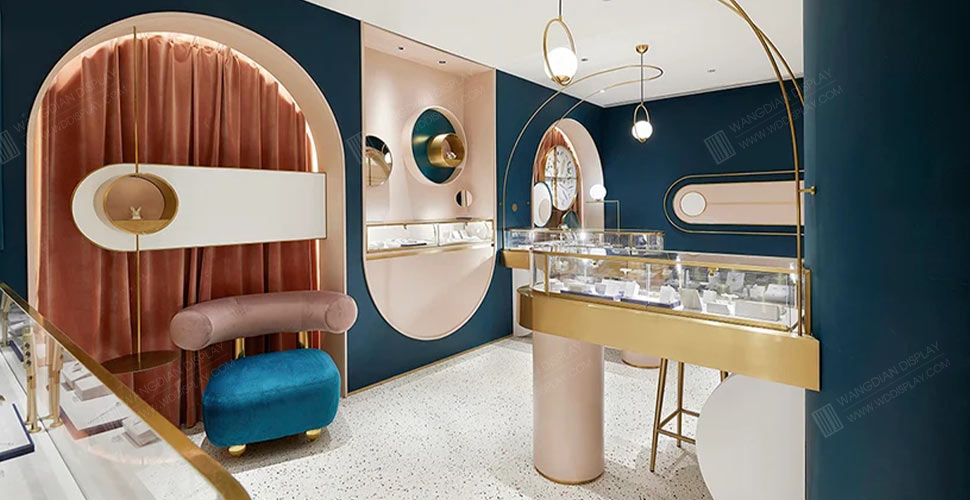
Customization is often assumed to mean higher cost. That is not always the complete picture.
A standard cabinet may initially appear cheaper, but if it does not fit the store properly, additional modification, on-site work or replacement may be required.
A properly engineered custom showcase can make better use of the available space and reduce unnecessary site adjustments.
The key is to distinguish between useful customization and unnecessary complexity.
A good manufacturer should help the client decide where customization adds real value and where a standardized component is perfectly adequate.
Lighting Can Change the Quotation Quickly
Lighting is another area where specifications can vary considerably. A basic LED strip and a carefully engineered jewelry lighting system are not equivalent.
Current retail lighting guidance increasingly focuses on color rendering, color temperature, optical control and serviceability rather than brightness alone. A professional showcase may require concealed light channels, specific beam angles, high-quality LEDs, dedicated drivers and accessible maintenance points.
For a flagship store with expensive jewelry, these details can be justified. For another type of retail environment, a simpler solution may be more appropriate. The important thing is to match the lighting system to the product and project rather than simply choosing the most expensive specification.
Quantity Changes the Economics
The cost of one custom prototype is not the same as the cost of producing fifty or one hundred units. Engineering development, tooling, sampling and setup are distributed differently across a larger production run.
This is particularly relevant for international jewelry brands preparing multiple stores. A manufacturer that understands both single-store customization and larger production programs can often help the client find a more practical balance between design consistency and manufacturing efficiency.
Packaging and Installation Are Part of the Cost
One quotation may include only factory production.
Another may include:
· engineering drawings;
· sample development;
· quality inspection;
· export packaging;
· international shipping coordination;
· installation;
· on-site adjustment;
· after-sales support.
The two prices should not be compared as if they represent the same service. For international projects, this distinction becomes particularly important.
A lower factory price does not necessarily mean a lower total project cost if additional site work, transport damage or installation issues appear later.
Ask for a Specification, Not Just a Number
When comparing custom jewelry display case quotations, the most useful question is not:
“Who is cheaper?”
It is:
“What exactly is included in the price?”
A professional comparison should look at the complete specification—glass, frame, internal structure, surface finish, lighting, hardware, packaging, quantity, installation and warranty. Only then does the price become meaningful.
Wangdian Display: Manufacturing Under One Roof
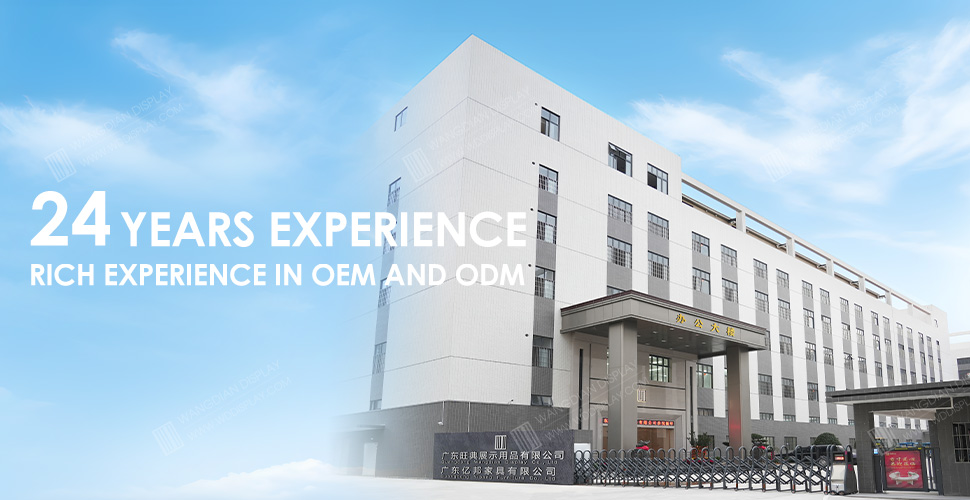
Wangdian Display has been engaged in professional display case manufacturing since 2002. With a 32,000-square-meter factory, dedicated design and R&D teams, and a 2,000-square-meter showroom, the company integrates design development, engineering, manufacturing, installation and after-sales service.
The company supports OEM and ODM projects and can manufacture according to client drawings and technical specifications. Its experience across jewelry, watches, perfumes and museum projects also allows different levels of customization to be considered according to the actual requirements of the project.
The Lowest Quote Is Not Always the Most Economical Choice
For a luxury jewelry project, the cheapest cabinet can become expensive if it needs to be repaired, replaced or modified shortly after installation.
The more useful approach is to evaluate the relationship between specification, durability, manufacturing quality, project service and long-term use.
A custom jewelry display case is not simply a line item in a store fit-out budget. It is a piece of equipment that will represent the brand every day. The right quotation is therefore not necessarily the lowest one. It is the one whose specification makes sense for the job.
+86 19195580698
info@wddisplay.com
+86 19195580698