The Project Does Not End When the Cabinet Leaves the Factory
A custom jewelry display case may look perfect inside a factory. But an international project has another test waiting.
The cabinet has to travel hundreds or thousands of kilometers, pass through logistics networks, arrive at a construction site, move through doors and elevators, and finally be assembled without losing the quality achieved during manufacturing.
For a luxury jewelry brand, this process deserves the same attention as the cabinet itself. A showcase damaged during transportation can delay an entire store opening. A poorly planned installation can create alignment problems that were never present at the factory.
This is why jewelry display case shipping should be considered during engineering—not after production.
Start With the Route
Before a large custom cabinet is manufactured, the logistics route should be understood.
Where will the goods be shipped?
What is the destination site?
What are the available unloading conditions?
Can the cabinet enter through the store entrance?
Is there an elevator?
Are there height or width restrictions?
These questions may sound basic, but they can change the construction method of the showcase. A cabinet that fits comfortably inside a factory may not fit through a narrow commercial doorway. For international projects, packaging dimensions can be just as important as the final cabinet dimensions.
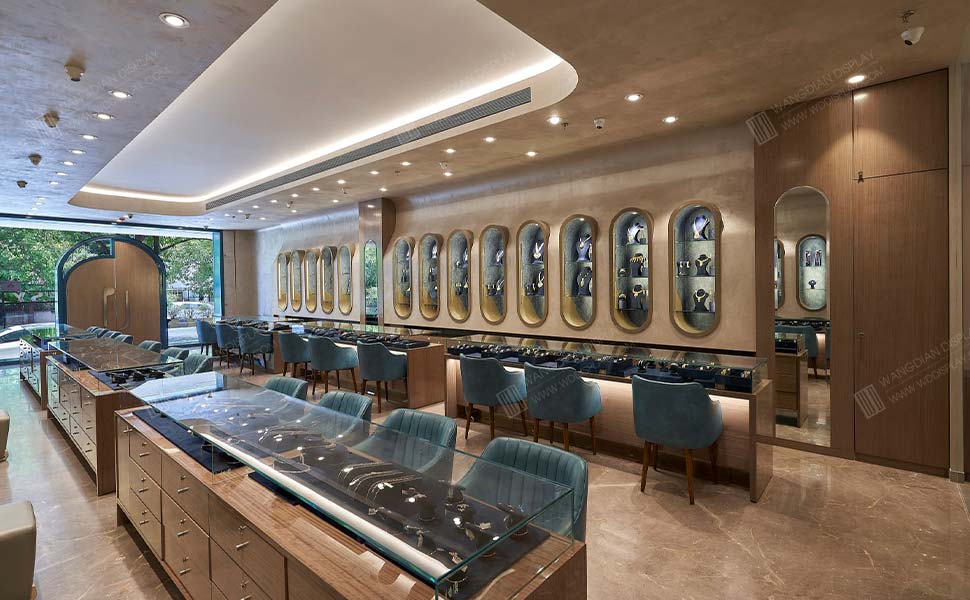
Large Does Not Always Mean One Piece
One of the decisions manufacturers often need to make is whether a large display unit should be shipped as a complete piece or divided into several sections.
Shipping as one piece can reduce assembly work, but it may create challenges in transportation and site access. Breaking the cabinet into smaller modules can make handling easier, but excessive segmentation can increase installation time and create more joints.
There is no universal answer. The right approach depends on the cabinet structure, destination, transportation method, site conditions and installation team. This is why shipping-friendly engineering needs to begin before fabrication.
Packaging Is Part of the Manufacturing Process
A luxury display case should not be treated like ordinary furniture during transportation. Glass, stone, metal finishes, polished surfaces and lighting components can all require different protection methods. A practical packaging strategy may include reinforced outer protection, internal cushioning, separated glass protection and carefully designed fixation points.
The objective is not simply to prevent the cabinet from breaking. It is also to prevent scratches, movement, deformation and surface damage. For premium projects, the packaging itself is part of quality control.
Glass Deserves Special Attention
Glass is one of the most vulnerable components during international transportation. A showcase may contain large areas of transparent glazing, and even a small impact can create serious problems. The packaging design therefore needs to account for the glass itself as well as the frame supporting it.
The selected glazing specification also depends on the application. High-value jewelry stores may require stronger security solutions, while museum environments can introduce additional requirements related to preservation and controlled display conditions.
The important point is that glass selection and packaging should not be treated as separate decisions.
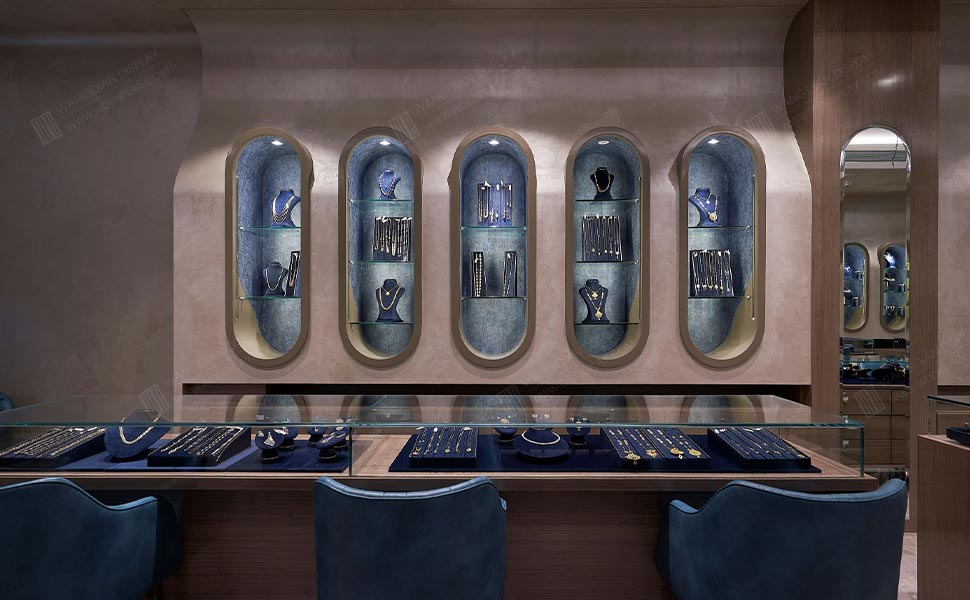
Installation Is Where Manufacturing Precision Becomes Visible
A well-manufactured showcase should arrive on site with a clear installation logic.
Panels should align.
Glass should sit correctly.
Lighting connections should be accessible.
Doors and drawers should operate smoothly.
The final joints should match the original design intent.
This sounds straightforward, but international installation sites rarely offer exactly the same conditions as the factory. Walls may have small deviations. Floors may not be perfectly level. Other contractors may still be working nearby. A professional installation team needs to know how to make necessary adjustments without compromising the original design.
Consistency Matters for Global Brands
For a jewelry brand with stores in multiple countries, one of the biggest challenges is consistency.
The showcase installed in Dubai should still feel like the same brand as the one installed in Hong Kong.
The materials should match.
The metal finish should match.
The lighting logic should match.
The proportions should remain recognizable.
This is where centralized manufacturing can provide an advantage.
Instead of relying on different local fabricators for every store, the brand can establish a controlled manufacturing standard and reproduce the same design through one experienced production partner.
Current retail fixture development is increasingly moving toward systems that can be repeated across multiple stores while still allowing local adaptation.
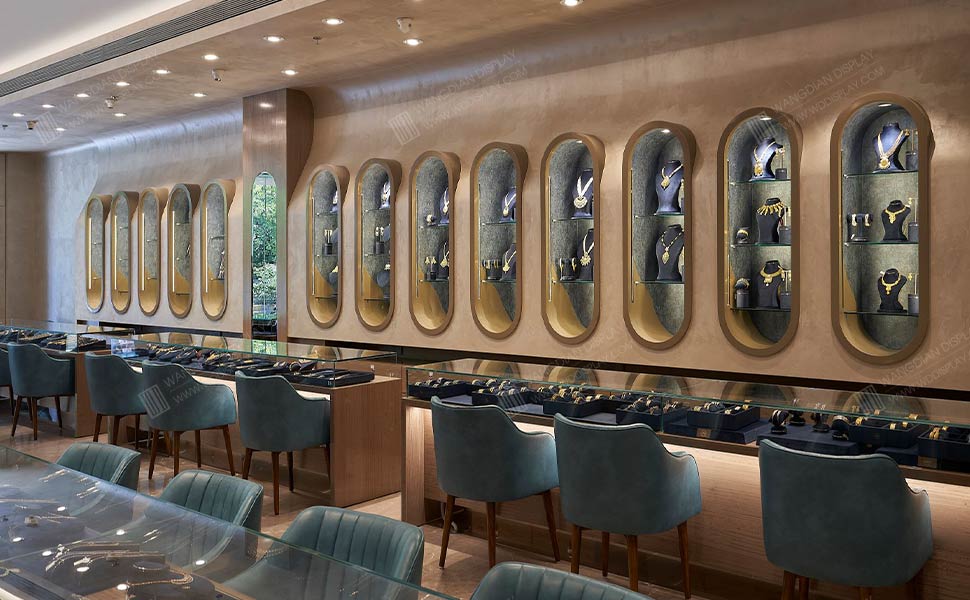
A Factory Should Understand the Installation Site
The best international projects involve communication between the factory, design team, logistics team and installation team before the products leave the production line.
Site drawings, dimensions, electrical requirements, access conditions and installation sequences should be confirmed in advance.
This is especially important when the project includes hundreds of individual display components. A small mistake repeated across an entire store can become a major problem. Early coordination is usually cheaper than fixing the same issue on site.
Global Experience Changes the Way a Manufacturer Thinks
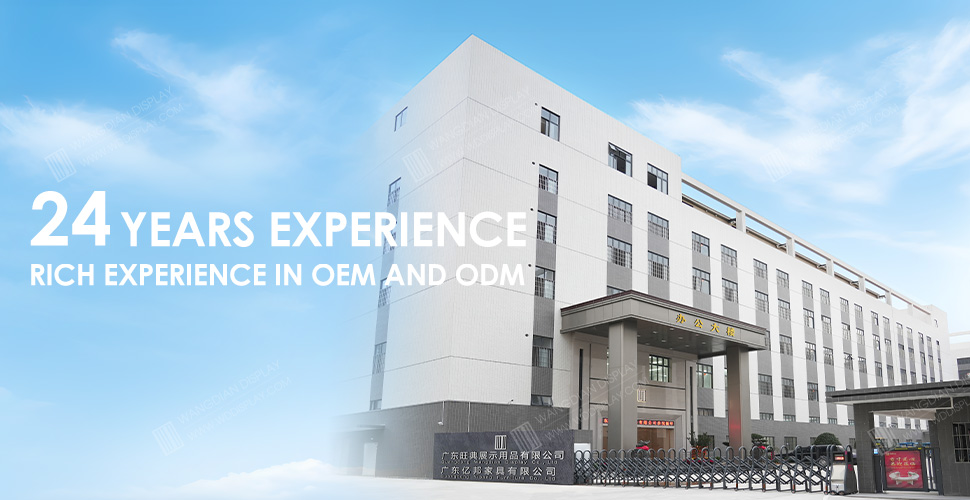
Wangdian Display has been serving international customers across more than 130 countries and regions, with experience covering jewelry, watches, perfumes and museum display projects. The company operates a 32,000-square-meter factory and provides integrated services covering design, manufacturing, installation and after-sales support.
For clients with their own designs, OEM and ODM services allow production to follow supplied drawings and specifications.
This type of manufacturing model is particularly useful for international projects because the same team can remain involved from engineering development through production and delivery.
A Successful Delivery Is Invisible
When an international jewelry store opens on schedule, customers rarely think about how the display cases arrived.
They do not see the packaging design.
They do not know how the glass was protected.
They do not know how many engineering decisions were made before production.
They simply see a finished store where every cabinet appears to belong exactly where it is.
That is what successful jewelry display case installation should look like.
The complexity exists behind the scenes so that the final retail environment feels effortless. For luxury jewelry brands, that is not a small detail. It is part of delivering the quality promised by the brand itself.
+86 19195580698
info@wddisplay.com
+86 19195580698