The Material Is Part of the Design
When a jewelry brand starts developing a new display case, the conversation usually begins with shape, dimensions and appearance. Materials often come later.
That order is understandable, but for a high-end jewelry display case, material selection can influence almost everything: the way light moves through the cabinet, how the jewelry is perceived, how the surface ages, how easy the cabinet is to maintain, and how well it survives years of commercial use.
A luxury showcase is rarely made from one material. Glass, metal, wood, stone, leather and engineered surfaces may all have a role to play. The challenge is not finding the most expensive material. It is finding the combination that works for the jewelry, the store environment and the brand.
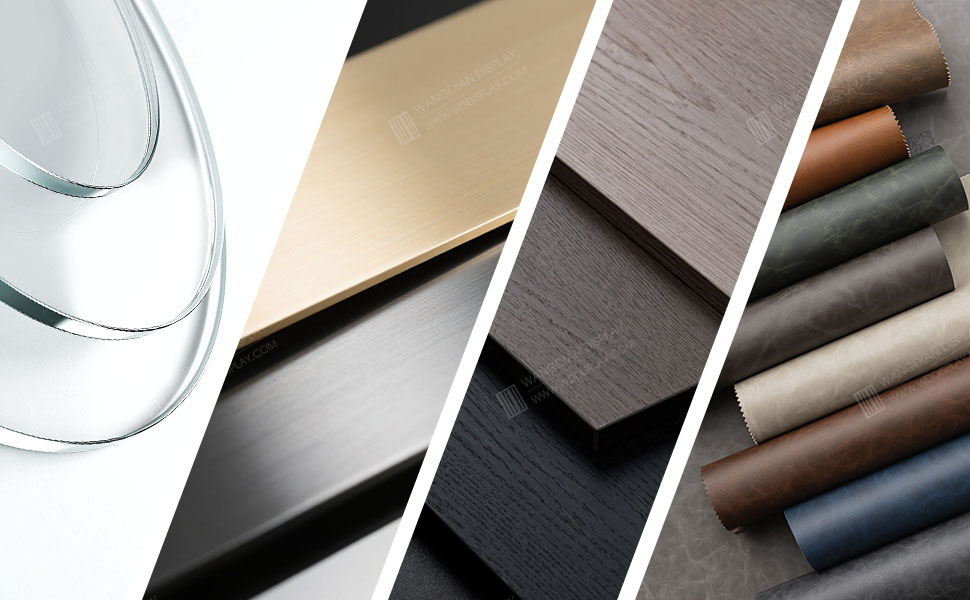
Glass: More Than Just Transparency
Glass is probably the most visible material in a jewelry showcase, but “clear glass” is not a sufficient specification for a premium project. For fine jewelry, optical clarity matters.
Low-iron glass can provide a cleaner, more neutral appearance than standard glass, which may have a noticeable green tint. This becomes particularly relevant when customers are looking at color-sensitive gemstones or when the brand wants the display environment to feel almost invisible. Anti-reflective treatments can also be considered in locations where glare is a significant concern.
The choice also depends on the security requirements of the project. A flagship jewelry store displaying high-value pieces may require a different glazing specification from a temporary exhibition or a shopping-mall counter. That decision should be made together with the manufacturer rather than selected simply because one glass type looks good on a sample.
Metal Defines the Character of the Cabinet
Metal is often used to create the structural frame, edge details, handles, trims and decorative elements of a jewelry display cabinet. But the same metal can produce completely different visual results depending on its finish.
Brushed stainless steel can create a precise architectural appearance. Champagne or bronze finishes can introduce warmth. Polished surfaces can create a more decorative effect, while matte finishes tend to reduce visual noise.
The important point is consistency. A metal finish should work with the brand's other elements—door hardware, signage, wall details, lighting and even furniture. When these elements are developed independently, the store can feel visually fragmented.
Wood Adds Warmth to a Hard Material Palette
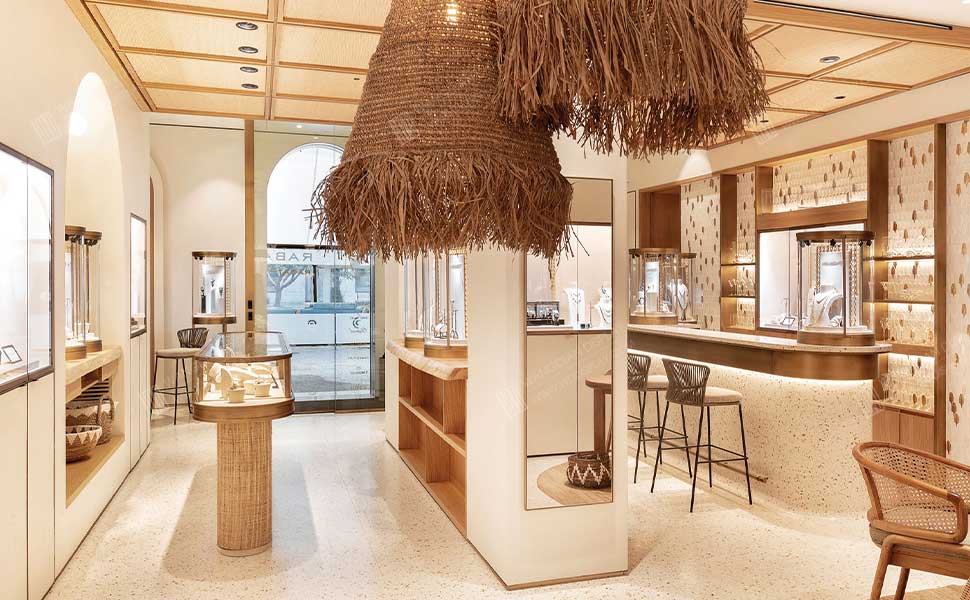
Glass and metal provide clarity and precision, but too much of either can make a jewelry environment feel cold. Wood veneer and carefully selected engineered wood products can introduce warmth and soften the overall atmosphere.
For luxury retail, the choice of veneer direction, grain matching, edge treatment and surface finish matters more than simply choosing a “premium wood.” A book-matched veneer, for example, can create a quiet architectural feature across a large cabinet panel. A more restrained grain can allow the jewelry to remain the visual focus.
This is where manufacturing precision becomes important. The material itself may be beautiful, but poor grain matching or inconsistent finishing can undermine the result.
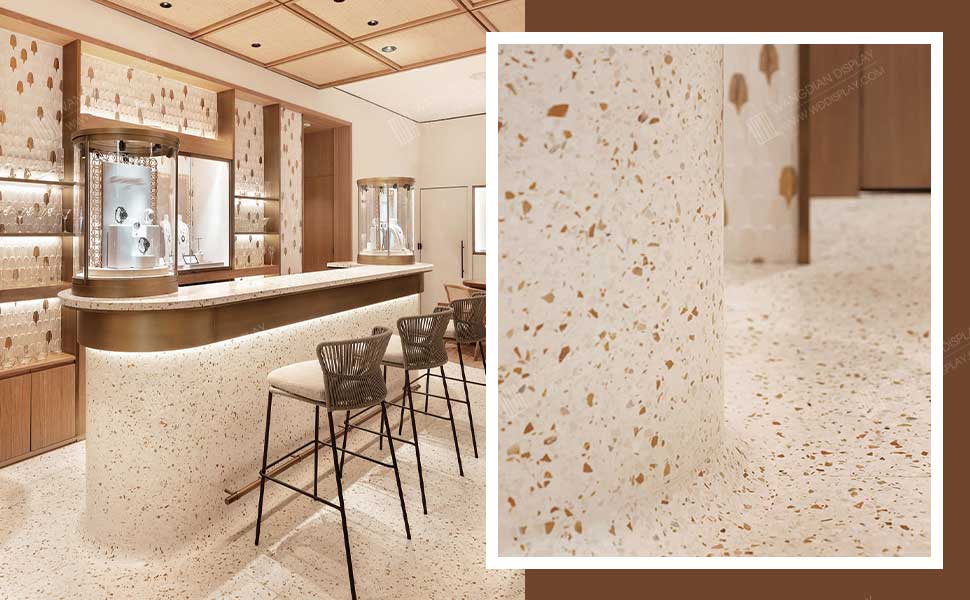
Stone Should Be Used With Restraint
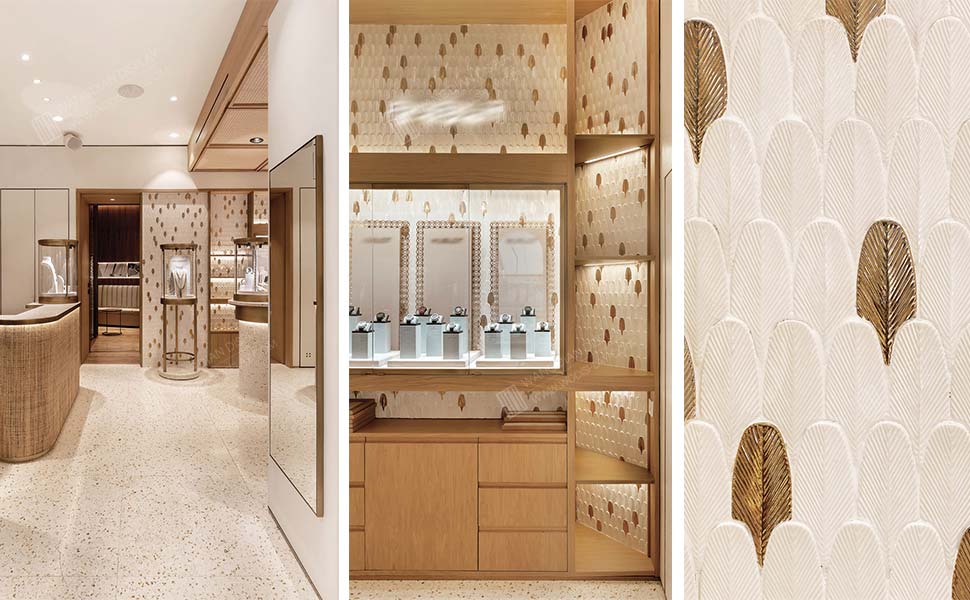
Natural stone and engineered stone can create a strong sense of permanence. Marble, travertine and other stone surfaces are sometimes used for bases, counters and architectural elements in luxury jewelry retail. Recent luxury display systems have also explored combinations of stone and metal to create a more architectural interpretation of the jewelry showcase.
However, adding more stone does not automatically make a display more luxurious. A heavy material palette can easily compete with the jewelry. The better approach is usually to use stone selectively—perhaps on a counter surface, plinth or focal display—while keeping the rest of the cabinet visually controlled.
The Interior Materials Matter Too
One of the easiest parts of a showcase to overlook is the interior.
The lining, trays, supports and internal surfaces sit directly around the jewelry. Their color, texture and reflectivity influence how the products appear. Dark velvet may create strong contrast against diamonds. Warm neutral tones may complement yellow gold. A lighter interior can create a more contemporary atmosphere.
The internal structure also needs to be practical for cleaning, product replacement and daily operation. For museums and collectible displays, material selection can become even more technical because the materials inside an enclosed case may need to meet conservation requirements. The Library of Congress, for example, notes that display materials and environmental conditions can affect the preservation of sensitive collections, with light, temperature, humidity and pollutants all requiring consideration.
There Is No Universal “Best” Material
This is perhaps the most important point. A good jewelry showcase manufacturer should not simply recommend the most expensive glass, the most luxurious metal or the most fashionable finish. The correct specification depends on the project.
Is the cabinet for a flagship boutique or a temporary exhibition?
Will it display diamonds, colored gemstones, watches or mixed collections?
Will it be installed in a coastal city?
Does the store require frequent collection changes?
Will the cabinet be shipped internationally?
Does the brand already have approved materials and finishes?
These questions should be answered before production begins.
Why Manufacturing Experience Matters
Material selection only works when design and manufacturing understand each other.
A material that looks perfect on a sample board may behave differently during machining, assembly, transportation or installation. This is why Wangdian Display develops custom display solutions through its own design, R&D and manufacturing capabilities.
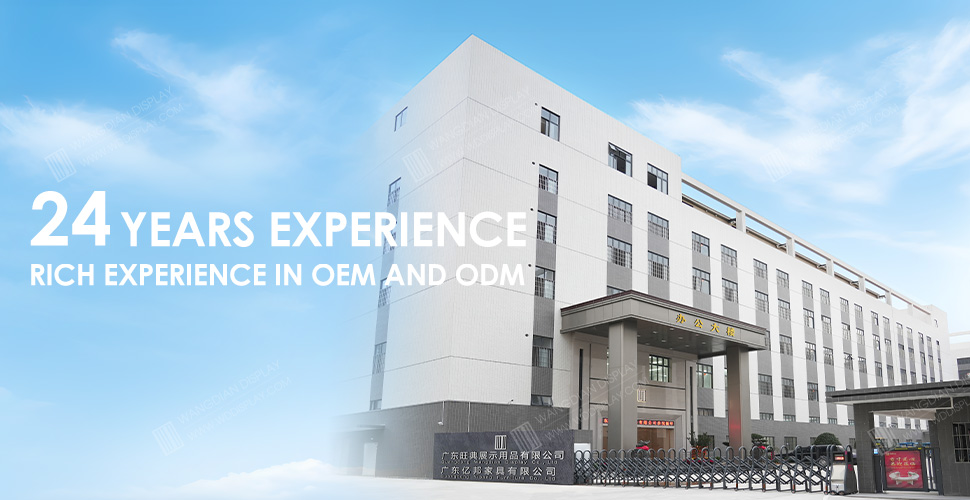
Established in 2002, the company operates a 32,000-square-meter factory and a 2,000-square-meter showroom, providing display solutions for jewelry, watches, perfumes, museums and other premium environments. With OEM and ODM capabilities, the company can manufacture according to client drawings while also supporting material selection and engineering development.
A Good Material Choice Should Still Look Right Years Later
The best material specification is not necessarily the one that creates the strongest first impression. It is the one that continues to perform after years of cleaning, product changes, transportation, customer contact and daily operation.
For a luxury jewelry brand, that distinction matters. A jewelry display case is a long-term part of the retail environment. Its materials should therefore be selected not only for how they look on opening day, but for how convincingly they will support the brand long after the doors open.
+86 19195580698
info@wddisplay.com
+86 19195580698