Security Should Not Be the First Thing Customers Notice
Jewelry retail has a unique challenge. The merchandise may be extremely valuable and require reliable protection, yet an overly obvious security system can make a luxury boutique feel closed, rigid, or overly defensive. A well-designed secure jewelry display case needs to achieve two things at once:
keep the jewelry highly visible while providing appropriate protection.
That is why security cannot simply mean adding a stronger lock.
Glass Is Part of the Security Strategy
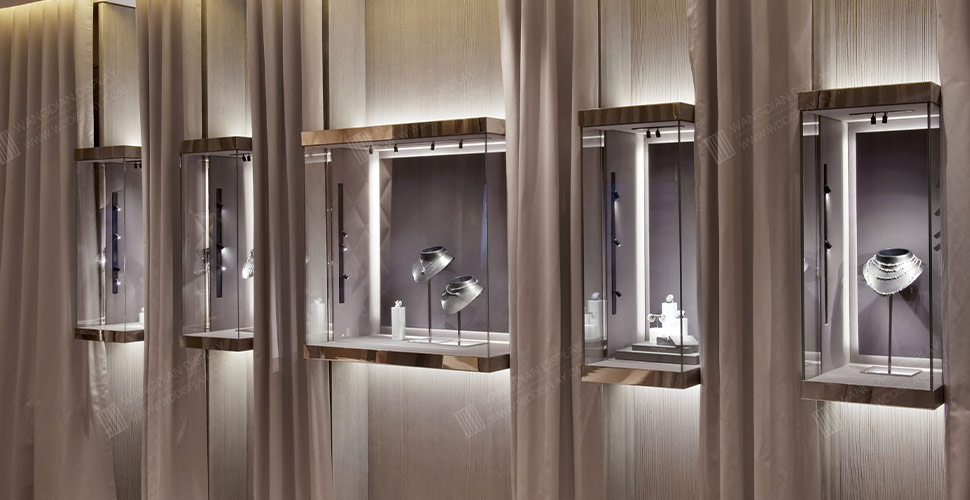
Glass is one of the most important visual elements of a jewelry showcase, but it is also part of its protective structure.
Different projects require different glazing specifications depending on merchandise value, store environment, and security requirements.
Museum display environments, for example, may combine laminated safety glass, low-iron glazing, and anti-reflective solutions depending on the protection and viewing requirements.
Luxury jewelry retail may have different priorities, but the principle remains relevant: security and visual performance should be considered together.
Locks Should Disappear Into the Design
A lock is an important part of a jewelry display case security system, but it does not need to become a visual feature. In a luxury environment, locks, access points, and staff-operated areas can be integrated into the cabinet structure.
Customers see a clean and uninterrupted display surface, while staff retain practical access for replenishment, adjustment, and daily operation.
The ideal result is simple:
staff know where the security system is; customers do not need to think about it.
Structure Matters Too
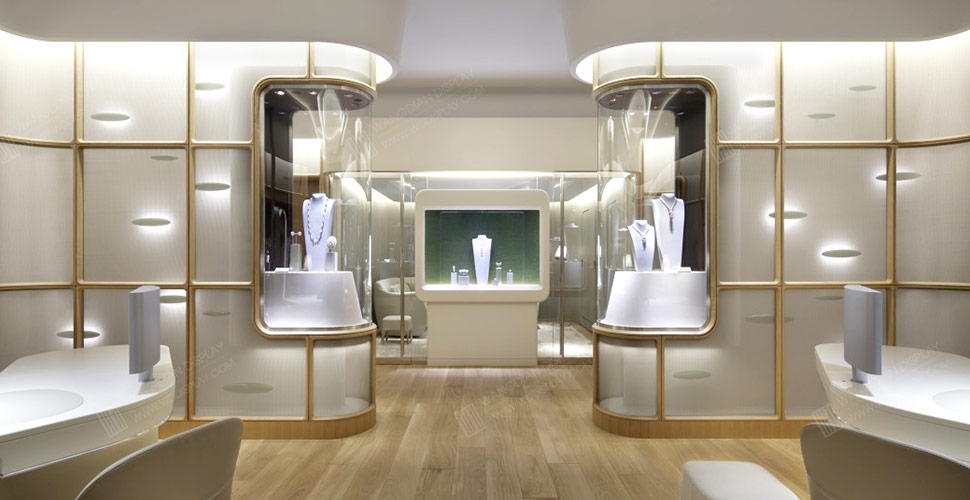
Security does not begin and end with glass and locks. The cabinet frame, doors, connections, internal storage, and anchoring method can all contribute to the overall protection of a showcase.
For custom projects, these requirements should be resolved during engineering rather than added after production. This allows the protective elements to become part of the cabinet architecture rather than appearing as secondary hardware.
Sightlines Are Also Part of Security
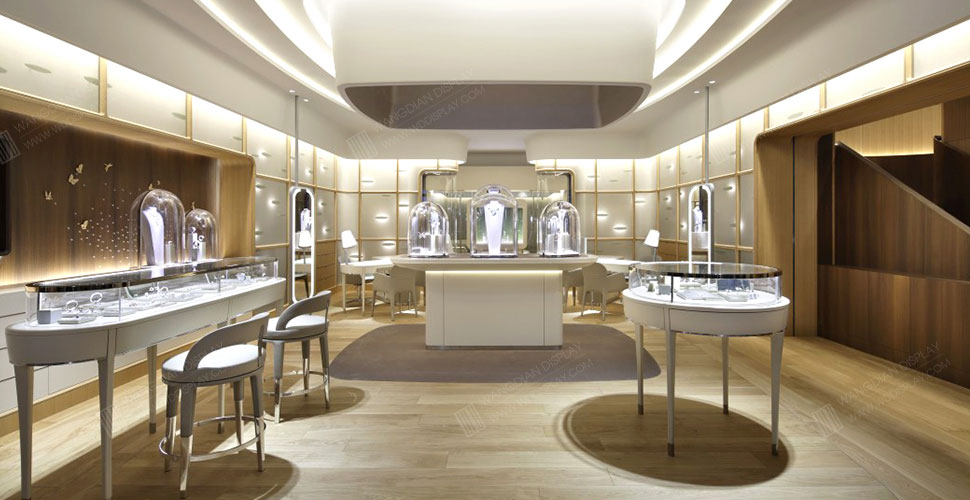
Security in a jewelry store is also connected to visibility. Poorly positioned or excessively tall cases can create blind areas for staff.
A carefully planned combination of case height, placement, customer circulation, and staff positioning can improve visibility without compromising the shopping experience.
Recent jewelry retail design guidance similarly emphasizes coordinating case dimensions, sightlines, staff positioning, access, and security during the broader store planning process.
Luxury Security Should Feel Quiet
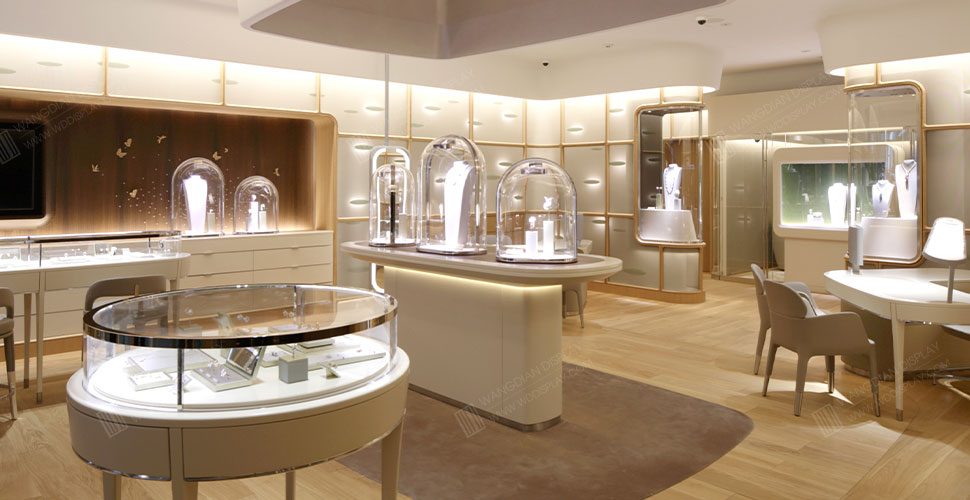
Luxury brands rarely want customers to focus on theft prevention. They want customers to focus on the jewelry.
The purpose of sophisticated jewelry display case security is therefore not to add more visible barriers, but to integrate glazing, locks, structure, access, and spatial visibility into one coherent system.
This becomes particularly important for diamonds, precious metals, high-end watches, and collectible jewelry.
Security Ultimately Supports the Brand Experience
Security does not have to compete with aesthetics. A properly engineered custom jewelry display case can incorporate protective structures while maintaining a sense of openness, refinement, and trust.
Wangdian Display provides customized display solutions for jewelry, watches, museums, and other premium environments, with display cases developed around merchandise, space, and brand requirements.
In luxury jewelry retail, the most effective security is often the quietest. It remains largely invisible to the customer while continuously performing an essential function.
+86 19195580698
info@wddisplay.com
+86 19195580698